


The 3 Stage Production Cycle for Better Project Management

If you try to plan, execute, and edit all at the same time, you are not managing a project. You are building a slow-motion catastrophe.
Most project failure does not come from a lack of effort. It comes from mixing the wrong kinds of work at the wrong time. A team tries to finalise the plan while delivery is already happening. Someone changes the brief while the crew is on location. The final review becomes a rescue mission because nobody protected time for finishing.
The 3-stage production cycle fixes that by separating work into three distinct phases:
Pre-production
Live production
Post-production
This model comes naturally from film and media production, where a day on set is too expensive and chaotic to improvise from scratch. Aidan’s experience in university filmmaking highlights the same lesson that systems engineers, product teams, event producers, and operations leaders learn again and again: quality improves when each phase has a clear job.
Pre is where you decide. Live is where you capture or execute. Post is where you refine, assemble, and prepare the work for the world.

Why the 3-stage cycle works
Many teams treat project management as a constant state of motion. Planning, execution, review, revision, stakeholder input, and delivery all happen at once. That feels productive because everyone is busy.
Busy is not the same as controlled.
The 3-stage production cycle works because it creates operational sequencing. This means each phase has a dominant purpose, a clear set of decisions, and a defined handoff into the next phase. It does not remove uncertainty, but it gives uncertainty a proper home.
In filmmaking, this is obvious. Pre-production includes the script, shot list, casting, location checks, gear booking, schedule, permissions, risk checks, and crew roles. If those choices are vague, the shoot day becomes a guessing game.
Live production is different. The crew must move quickly. The camera rolls. The light changes. Actors, presenters, or interviewees have limited energy. The goal is not to debate the entire creative direction. The goal is to capture the planned material with enough flexibility to solve live problems.
Post-production is different again. Editing, colour, sound, graphics, review, correction, and export need patience. If the shoot was poor, post cannot perform miracles. If post is rushed, strong raw material can still become a weak final asset.
The same pattern applies outside media:
Phase | Main question | Failure when ignored |
Pre-production | What are we making and what must be true before we begin? | The team starts with unclear goals, missing resources, or hidden risks. |
Live production | How do we execute with focus under real conditions? | The team changes direction midstream and burns time. |
Post-production | How do we refine, test, package, and deliver the final result? | The work ships rough, inconsistent, or incomplete. |
This is why The 3 Stage Production Cycle for Better Project Management is more than a film idea. It is a practical mental model for any venture where quality, timing, and coordination matter.
Stage one is pre-production
Pre-production is the work before the work. It is not admin. It is architecture.
This phase decides what the project is, what it is not, who owns each part, where the risks sit, and what conditions must exist before the live phase begins. In a creative project, pre-production might include mood boards, references, scripts, call sheets, location plans, gear lists, budget checks, and creative sign-off. In a technology or operations project, it might include requirements, dependency mapping, user flows, system constraints, test plans, procurement, and escalation paths.
The key is to make decisions while change is still cheap.
A weak pre-production phase often sounds like this:
“We’ll figure it out on the day.”
“Let’s just start and adjust as we go.”
“The brief is clear enough.”
“We can fix that later.”
Sometimes this works for tiny tasks. It fails on complex projects because the live phase has less space for thinking than people expect.
What good pre-production includes
A strong pre phase should answer five questions.
What is the outcome?
State the desired final result in plain words. Not “a strong campaign” or “a better workflow”. Be specific. A 6-minute finished video. A tested onboarding flow. A launch event for 80 guests. A migration completed without data loss.
What are the constraints?
List the fixed limits. These might include budget, time, legal requirements, technical limits, location rules, available people, or delivery dates.
What must be ready before execution starts?
Create a readiness checklist. This prevents the team from entering the live phase with missing equipment, unclear approvals, or unfinished inputs.
Who decides what?
Separate creative, technical, operational, and final approval authority. Projects stall when every decision needs a new conversation.
What could break?
Name the most likely failure points. Then decide what you will do if they happen.
In film production, this might mean a wet-weather plan, spare batteries, backup audio, or a secondary location. In systems work, it might mean rollback steps, extra testing time, or a freeze period before launch.

Stage two is live production
Live production is the compressed execution window. It is the shoot day, launch day, event day, migration window, recording session, build sprint, field operation, or customer rollout.
This phase rewards preparation and punishes confusion.
During live production, the team should not reopen every core decision. Some adjustment is normal. Conditions change. People get sick. Equipment fails. Weather shifts. A client or contributor may spot something useful. But the live phase should not become a second planning phase.
The main job is to protect focus.
In Aidan’s university filmmaking context, this might mean blocking a scene, checking sound, setting lights, capturing coverage, and keeping the cast moving. If the team starts rewriting the whole scene at that point, the schedule collapses. Every delay affects the next setup. Every unclear role creates friction. The day becomes longer, and the final footage often gets worse.
The same applies to non-creative projects. A software release window is not the right time to debate the product strategy. A live event is not the right time to redesign the running order. A manufacturing run is not the right time to discover that the specification was never approved.
How to run the live phase well
A good live phase needs a different rhythm from pre-production.
Keep communication short. Use clear calls, short updates, and visible next steps. Long debates belong before or after.
Track changes in one place. If something changes during execution, record it. This helps post-production understand what happened and why.
Protect the main objective. Small improvements can damage the whole project if they distract from the essential outcome.
Assign a live lead. This person keeps the work moving, resolves minor blockers, and decides when to escalate.
Build in recovery space. Even a good plan needs margin. Film crews need reset time. Engineers need testing windows. Event teams need buffer between key moments.
The live stage is where theory meets contact with the real world. It should feel intense, but not random. A strong live phase has momentum because the thinking that supports it has already been done.
Stage three is post-production
Post-production is where the project becomes deliverable.
This phase is often misunderstood. Some teams treat it as a quick tidy-up. That is a mistake. Post is where raw output becomes finished work. It is where the project earns its final quality.
In film, post-production includes editing, sound design, colour correction, music, titles, exports, captions, and review. It also includes hard choices. A beautiful shot may be cut because it slows the story. A line may need replacing because the audio is weak. The final form matters more than attachment to individual pieces.
In other fields, post-production might include:
Quality assurance
User acceptance testing
Documentation
Packaging and handover
Legal or compliance review
Final stakeholder approval
Retrospective learning
Archiving files and decisions
This is the stage that separates completion from delivery.
A project can be “done” in the sense that the live work happened, yet still not be ready. The event may need follow-up material. The product may need release notes. The training programme may need recordings, worksheets, and feedback review. The new process may need documentation so the next team can repeat it.

Why post-production needs real time
The most common post-production failure is underestimating the finish.
Teams plan the launch, the shoot, the build, or the event, then leave almost no time for review. This creates a painful pattern. Everyone expects polish, but nobody protected the hours required to create it.
Post needs time because finishing involves judgement. It is not only checking boxes. It is sequencing, trimming, correcting, testing, and making the whole thing coherent.
A useful rule is simple: if the work will be judged by its final form, post-production is not optional.
For a video, the audience experiences the edit, not the shoot. For a website, the user experiences the published flow, not the whiteboard plan. For an event, people remember the full journey, not the internal planning notes. For a system rollout, users deal with the final process, not the team’s intentions.
Post is where intentions become experience.
The failure point is phase collapse
The most dangerous project failure is not a bad idea. It is phase collapse.
Phase collapse happens when planning, execution, and finishing overlap so heavily that none of them can work properly. The team is still deciding the concept during delivery. The live phase keeps creating new unresolved questions. Post-production becomes a place to fix problems that should have been solved earlier.
This creates three types of waste.
Planning waste appears when decisions are repeatedly reopened. The team burns energy going in circles.
Execution waste appears when people wait, redo work, or act on unclear instructions.
Finishing waste appears when post-production becomes a repair shop instead of a refinement phase.
The solution is not rigid perfection. Some projects need iteration. Agile teams, creative groups, and research-led work all need feedback loops. The point is to know which mode you are in.
Iteration still benefits from sequencing. A sprint has planning, active work, review, and improvement. A prototype has design, test, and revision. A film student may shoot a rough version, review it, and then shoot again. Each loop still has phases.
The problem is not iteration. The problem is pretending every phase can happen at full speed at the same time.
How to apply the cycle to any project
To use the model, start by drawing three columns: pre, live, and post. Then place every major task in the phase where it truly belongs.
Do not place tasks where you wish they could happen. Place them where they must happen for the project to work.
Build a pre-production gate
Before the live phase begins, require a clear readiness check. This should be simple enough to use, but firm enough to matter.
A pre-production gate might include:
Final goal agreed
Core brief approved
Roles assigned
Resources confirmed
Risks named
Timeline accepted
Live phase checklist complete
Post-production time protected
If these items are not ready, do not pretend the project is ready. Starting early often costs more than waiting.
Define the live rules
The live phase needs rules for decisions, changes, and escalation.
For example, decide which changes can be made instantly, which need approval, and which must wait until post. A camera operator can adjust framing. A director can cut a shot. A producer may need to approve overtime. A client cannot rewrite the whole concept halfway through the shoot without consequences.
The same thinking works for engineering, events, operations, and content production.
Reserve the finish before you start
Post-production time should be booked during pre-production. Treat it as part of the project, not spare time after the exciting bit.
If the final output needs review, testing, editing, documentation, or packaging, schedule it. Name the owner. Set the standard. Decide how many review rounds are allowed.
This one habit prevents many late-stage crises.
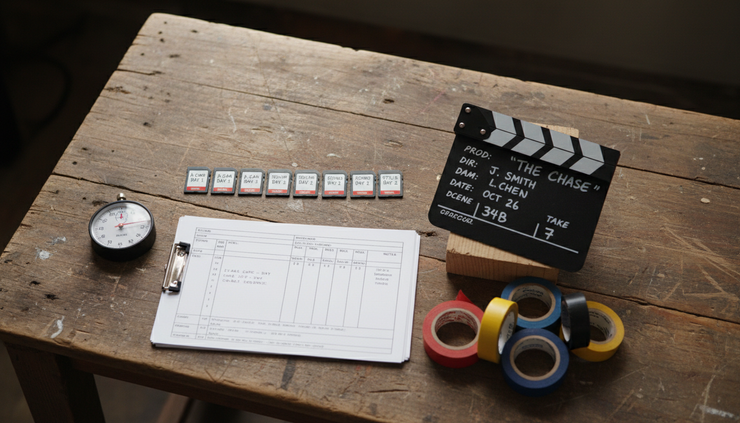
The real value is architecture
The 3-stage cycle is not a trendy framework. It is an architecture of scale.
Small tasks can survive messy sequencing. Major ventures cannot. As soon as a project involves multiple people, fixed deadlines, technical limits, creative judgement, or real cost, the order of work matters.
Pre-production protects the live phase. Live production creates the raw material or core outcome. Post-production turns that outcome into something fit to deliver.
When those stages blur, teams confuse motion with progress. When those stages are respected, projects become calmer, faster, and better.
To see how this model unfolds in conversation, watch the full Beyond the Horizon episode on YouTube or listen on Spotify. The breakdown around the 00:40:25 mark focuses on one of the key failure points in this cycle. To go further, download the implementation frameworks and join the Beyond the Horizon Patreon community.
The next time a project feels chaotic, do not ask people to work harder first. Ask which phase has collapsed. Then rebuild the sequence: plan deeply, execute cleanly, and finish with care.


Comments