


How to Verify Career Alignment Before Choosing a Degree

Choosing a degree from a spark of interest can feel brave. It can also be expensive, exhausting, and hard to undo.
A passing fascination is useful, but it is not a foundation. A teenager who loves films may not love twelve-hour production days. Someone who enjoys psychology videos may not enjoy research methods, safeguarding, or years of supervised practice. A person drawn to architecture may discover too late that studio critique, technical drawing, and building regulations are the real centre of the work.
The better approach is to treat degree choice like an engineering problem. Before committing years of time and serious money, test whether the interest can survive pressure, structure, feedback, and market reality.
That is the purpose of the Target Interest Career Pipeline. It moves a career idea through five filters:
Baseline curiosity
Structural academic study
Physical coursework application
Local market research
Specialised institutional enrolment
Each filter answers a different question. Together, they help verify career alignment before choosing a degree, instead of hoping the degree will create alignment later.

1. Capture the baseline curiosity
Every pipeline starts with raw material. In career planning, that raw material is curiosity.
Curiosity is the first signal, not the final answer. It might show up as a subject that keeps pulling attention, a type of project that feels energising, or a field that seems worth studying even when nobody is asking for it.
At this stage, the aim is not to pick a degree. The aim is to name the attraction clearly.
A weak version sounds like this:
“I like media.”
“I’m interested in helping people.”
“Engineering seems stable.”
“I enjoy being creative.”
A stronger version is more specific:
“I like the way editing changes the emotion of a scene.”
“I am interested in how young people learn and develop.”
“I enjoy solving physical design problems with maths.”
“I like building visual concepts from a loose brief.”
That difference matters. A vague interest can attach itself to the wrong degree. A precise interest gives the next stage something useful to test.
For example, Aidan’s path into university filmmaking production makes more sense when framed through specific curiosity. “I like films” is too broad. It could point towards criticism, screenwriting, cinematography, directing, editing, sound, production design, marketing, or cinema studies. The pipeline asks for a sharper signal. Is the interest in storytelling, production logistics, visual control, camera systems, performance, or post-production?
The first task is simple: write a one-paragraph curiosity statement. It should answer three questions.
What keeps drawing attention?
What part of the work seems most interesting?
What would be worth testing even if it turns out to be difficult?
A useful curiosity statement does not need to sound impressive. It needs to be testable.
2. Study the structure before studying the subject
Once curiosity has a shape, the next step is academic structure.
This is where many degree choices go wrong. People choose a subject based on the public image of the field, then discover the curriculum feels nothing like the fantasy.
A film degree is not only filming scenes. It may include theory, editing workflows, production paperwork, lighting, sound, group critique, script analysis, and long hours on set. A psychology degree is not only discussing behaviour. It often includes statistics, research design, ethics, biology, and academic writing. A business degree is not only entrepreneurship. It may include accounting, operations, law, economics, and organisational behaviour.
The question at this stage is:
Can the interest survive the curriculum, not just the idea of the career?
Look at module lists from several universities. Read the required units, not only the course description. Course pages often sound exciting because they are designed to attract applicants. Module titles and assessment methods reveal the real academic load.
Build a simple map with three categories.
Curriculum area | Reaction to it | What it reveals |
Subjects that create energy | These are strong alignment signals | The degree may match natural motivation |
Subjects that feel neutral | These are tolerable support areas | The path may still be workable |
Subjects that create resistance | These need serious testing | The degree may carry hidden friction |
The goal is not to love every module. No degree is built only from favourite topics. The goal is to spot whether the unavoidable core of the course matches the interest.
In education and human development, this is a curriculum design problem. A good pathway sequences skill growth. It starts with foundations, adds practice, increases complexity, then expects independent work. A student choosing a degree should inspect that sequence before enrolling.
If the first year already seems unbearable on paper, that is not a sign of weakness. It is useful data.

3. Test the work with physical coursework
Reading about a field is not enough. The next filter is physical application.
This stage asks a harder question:
Can the body and mind tolerate the real tasks?
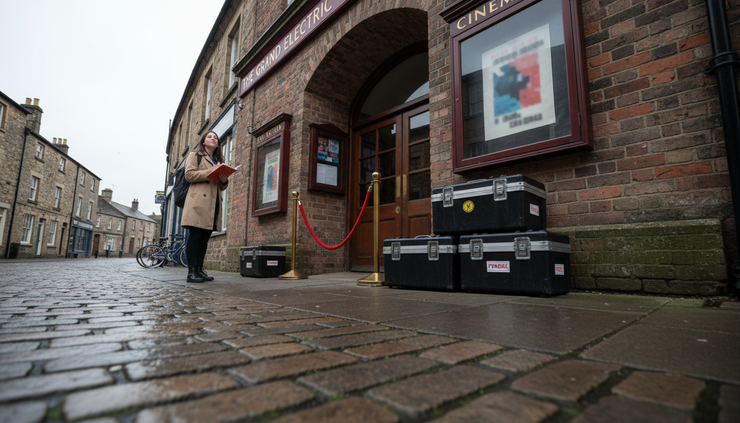
For creative direction, visual arts, and media production, the answer only appears through making things. A person may love cinema as an audience member but dislike hauling kit, managing continuity, recording clean audio, backing up files, or waiting for the right light. Another person may be less romantic about film but thrive inside the pressure of a shoot because they enjoy coordination, problem-solving, and visual detail.
Physical coursework can include formal classes, short courses, open workshops, portfolio projects, volunteering, or self-directed assignments. The format matters less than the contact with real materials and real constraints.
For filmmaking production, a test project might include:
Plan a one-minute silent scene.
Create a shot list and basic schedule.
Film with limited equipment.
Edit the footage into a finished sequence.
Screen it for feedback.
Write a short reflection on what felt energising and what felt draining.
That final reflection is crucial. The pipeline is not asking, “Was the project good?” It is asking, “Did the work reveal a stronger fit or a weaker fit?”
A person testing education might volunteer in a learning setting, design a short lesson, tutor a younger student, or observe how skilled teachers sequence concepts. A person testing engineering might build a small physical prototype, join a robotics group, or complete a design challenge with measurement and constraints. A person testing healthcare might seek appropriate shadowing or approved volunteering, while respecting all privacy and safeguarding rules.
Good tests include friction. If a test is too easy, it may only confirm interest in the idea. Real coursework reveals stamina, patience, attention to detail, and response to feedback.
Two signals are especially useful.
Recovery speed
After a hard task, does interest return? Every serious field produces fatigue. Alignment shows when effort does not permanently kill the desire to improve.
Feedback response
When work is criticised, does the person become curious about improving, or only defensive and detached? A career path will involve repeated correction. The right field often makes feedback painful but useful.
4. Research the local market before trusting national stereotypes
A degree does not exist in a vacuum. It connects to an actual labour market, and that market is often local.
The popular image of a career can hide how work is really found. Creative media is a good example. National success stories make the field look linear, but early opportunities may depend on nearby studios, local production companies, regional arts organisations, festivals, universities, theatres, agencies, or independent crews.
The same applies across fields. A student interested in environmental work should look at local planning authorities, consultancies, charities, infrastructure projects, and research centres. Someone interested in youth work should study schools, councils, community organisations, safeguarding requirements, and funding patterns. A future software student should look beyond broad salary talk and inspect the kinds of junior roles that exist within reach.
Local market research should answer practical questions.
What entry-level roles appear repeatedly?
What skills do they ask for?
What portfolios, placements, licences, or checks are expected?
Which employers, studios, schools, practices, or organisations exist nearby?
Are internships and placements common?
Do people enter through formal graduate schemes, freelance networks, apprenticeships, or postgraduate training?
What evidence would make a graduate credible?
This stage protects against fantasy and panic. It stops a student from assuming that a degree automatically creates work. It also stops them from rejecting a field too early because they only know the most visible jobs.
For media production, the market may reveal that the degree itself is only one part of the path. A showreel, crew experience, reliability, technical competence, and peer networks may matter just as much. That does not make the degree useless. It clarifies what the degree must be chosen to support.
A strong programme should not only teach content. It should help build evidence.
5. Choose the institution after the path is proven
Only after the first four stages should institutional choice become serious.
This reverses the usual order. Many students start with university rankings, campus appeal, or brand recognition. Those things can matter, but they should not lead the process. A famous institution cannot fix a poorly matched path.
Once the target interest has survived testing, compare institutions against the evidence gathered.
For a filmmaking production route, the key questions may include:
Does the course include regular production work?
Are students able to use appropriate cameras, lighting, sound, and editing facilities?
How early do practical projects begin?
How does the course balance theory with making?
Are there links to local festivals, studios, crews, or placement routes?
Do graduates leave with portfolio material?
How is group work assessed?
What kind of feedback culture exists?
For other fields, the criteria will shift. Education routes may need placement quality and safeguarding preparation. Engineering may need lab access, accreditation, project work, and industry links. Creative arts may need studio time, critique culture, exhibition routes, and tutor expertise.
The principle stays the same: choose the institution that serves the verified path, not the path that sounds best at the institution.
This is where the pipeline becomes more than career advice. It becomes career architecture. The degree sits inside a larger design. Curiosity is the foundation. Curriculum is the frame. Coursework is the stress test. Market research is the site survey. Institutional enrolment is the build.
Skip the early stages, and the structure may crack later.
6. Decide with evidence, not pressure
The final step is a decision review.
Before applying, gather the evidence in one place. This should be short enough to read in one sitting and clear enough to show a parent, mentor, teacher, or careers adviser.
Use five headings.
Pipeline stage | Evidence to record |
Curiosity | The specific interest that started the process |
Academic structure | Modules, assessments, and required subjects that match or concern you |
Coursework test | Projects, workshops, volunteering, or practice tasks completed |
Market research | Local roles, skills, organisations, and entry routes found |
Institution fit | Courses that support the path with facilities, teaching, placements, or portfolio evidence |
Then look for the pattern.
A strong fit usually has these signs:
The curiosity became more specific over time.
The academic structure feels demanding but meaningful.
Practical work created fatigue without killing motivation.
Market research revealed real entry routes.
The institution offers support that matches the career evidence.
A weak fit often shows the opposite:
The interest stays vague.
Core modules feel unrelated or consistently draining.
Practical tests reduce motivation.
Local market research reveals a mismatch with desired lifestyle or skills.
The preferred university is attractive for reasons unrelated to the path.
This process will not remove all risk. No framework can promise a perfect career choice. It can reduce blind commitment. It can turn a life-shaping decision from a guess into a tested direction.

The degree should confirm the direction, not create it
A degree is too large a commitment to use as a first test. It should come after smaller tests have already shown that the path can hold weight.
The Target Interest Career Pipeline gives career choice a sequence. Start with curiosity, then study the curriculum, test the work, research the local market, and choose the institution that fits the evidence. That order protects time, money, and energy.
For the full discussion, including the breakdown of the model’s failure point around the 00:40:25 mark, watch the episode on YouTube or listen on Spotify. To master the execution, use this as the foundation, then take the implementation frameworks into the Beyond the Horizon Patreon community.
The right question is not “Which degree sounds exciting?” It is “Which path has survived enough tests to deserve the next commitment?”


Comments